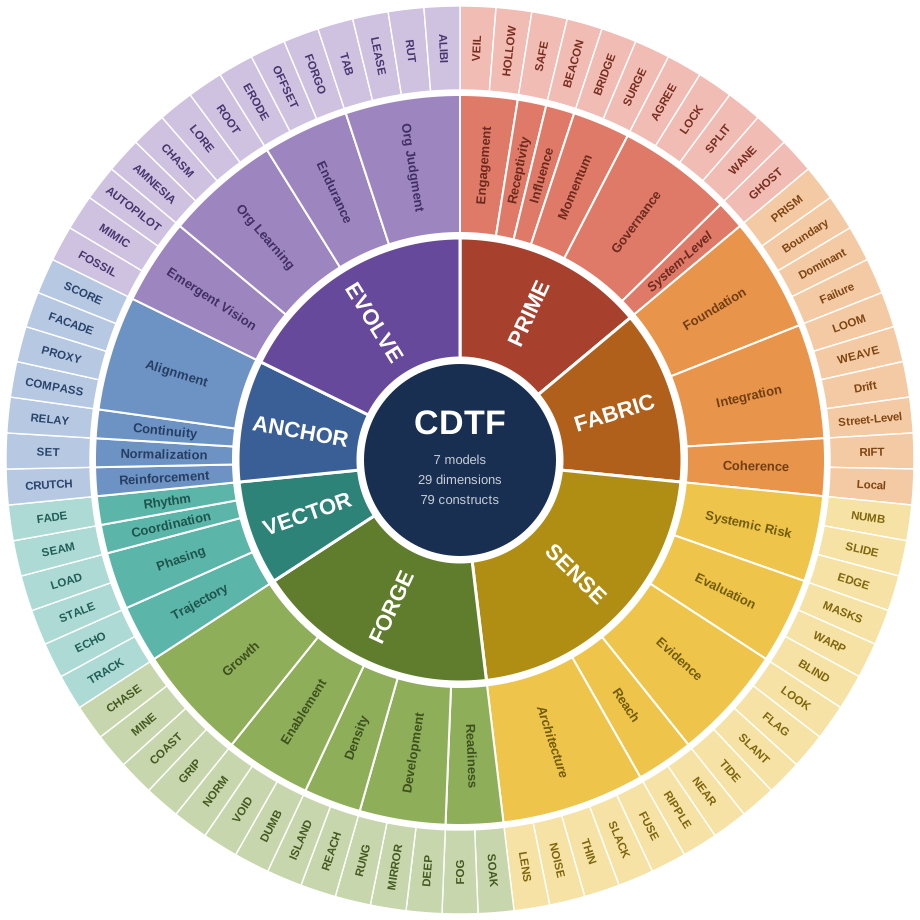
The framework

A whole-system framework from diagnosis through execution.

CDTF connects organizational diagnosis, transformation design, and execution so that evidence shapes the program's design, governance, and operating decisions.

A connected structure

From the whole organization to the decisions that shape execution.

The framework provides the complete view. Seven models direct attention to connected areas of the organization. Dimensions group related concerns within each model. Constructs identify the specific conditions that can change how the response is designed and executed.

FrameworkThe complete organizational view
ModelsSeven connected lenses and levers
DimensionsRelated areas within each model
ConstructsSpecific conditions with design and execution consequences

The seven models

The models work together.

Each model focuses on a different part of the organizational system and shapes a different set of design and execution choices. Each model's name reflects the connected concerns the model brings into view.

Select a model to explore its purpose and dimensions.

People and leadership

PRIME

People engagement, Receptivity, Influence, Momentum, and Executive governance

PRIME addresses whether a transformation has genuine stakeholder investment, credible executive sponsorship and governance, effective influence networks, and enough momentum to continue when pressure rises.

Dimensions
  • People Engagement
  • Receptivity
  • Influence
  • Momentum
  • Executive Governance
  • System-Level

Designed around evidence

The architecture stays consistent. Its emphasis changes.

Each transformation unfolds within an organization shaped by its own history, capabilities, relationships, constraints, and emerging conditions. CDTF provides a coherent architecture for understanding that environment and shaping a response without prescribing a fixed sequence. The models organize what needs attention, while the constructs serve as lenses for diagnosis and levers for design and execution. Evidence determines which constructs become active, how they are applied, and when they require attention. Only the constructs relevant to the conditions present require attention at any given time. As conditions change, constructs may become active, go dormant, or return to the work.

The capability test

Capability is what remains after temporary support is phased out.

Individual knowledge and skill are only part of organizational capability. People, teams, processes, systems, decisions, and support must work together reliably under real operating conditions.

A connected view

CDTF works with the disciplines already guiding the program.

Program management organizes delivery. Technology teams design and implement the systems the transformation requires. CDTF connects those disciplines to choices about design, governance, capability, execution, communications, training, engagement, and adoption. This integrated view helps leaders understand the organizational conditions shaping the work, determine where the current approach needs adjusting, identify what the program may be missing, and assess whether the capability will remain after temporary support is phased out.

How the framework works

Lenses for seeing. Levers for changing.

The models operate as lenses rather than stages in a sequence. Each brings a different class of conditions into focus. They also operate as levers, translating evidence into choices about design and execution. The first view contrasts CDTF's expert-toolbox approach with a packaged method. The second shows how constructs can move independently through diagnosis, design, and execution as conditions change.

Choose a view

Start with the comparison, then explore the construct lifecycle.

Built for judgment

CDTF works as an expert toolbox.

Many transformation approaches begin with a standardized assessment based on a predefined view of the problem, then guide users toward a recommended intervention. CDTF begins by investigating the conditions shaping the organization and the transformation. Evidence reveals what requires attention, and judgment determines how the framework is configured and applied across diagnosis, design, and execution.

Common packaged approachA predefined method shapes the path
Begins with
A predefined explanation of what change requires and a standard set of categories for assessing it.
Chooses the response
The method directs attention toward interventions that fit those categories.
Uses judgment to
Determine how to apply the method within its predefined structure.
When conditions change
Unexpected conditions are usually interpreted and managed through the method's existing categories rather than used to reconsider the method itself.
CDTF expert toolboxEvidence and judgment shape the response
Begins with
Evidence about the conditions shaping this organization and transformation.
Chooses the response
Relevant constructs are selected and combined to shape diagnosis, design, and execution.
Uses judgment to
Interpret the evidence and configure the response from the start.
When conditions change
New evidence can activate different constructs and change the response without restarting the framework.

Benefits of CDTF's fit-for-purpose approach

Better fit

The response is shaped around the conditions actually present.

Proactive risk response

Emerging risks and issues are surfaced while there is still time to change design or execution.

Less wasted effort

Attention and resources are not spent on tools the work does not require.

Adaptation without starting over

New evidence can activate or reactivate constructs while the larger architecture remains consistent.

Durable capability

The organization is better prepared to sustain the new way of operating after temporary program support ends.

Applications of CDTF

Design for the organization you actually have.

CDTF can be configured for enterprise AI adoption, ERP and digital transformation, mergers and integration, operating-model redesign, regulatory transformation, and workforce or process change. The architecture remains consistent while its emphasis, evidence, language, constraints, and application change to fit the organization and the transformation.

Additional applications will be featured over time, each showing how CDTF can be configured for a different transformation context.

See the structure in action

Explore twelve of the nearly eighty building blocks that make up the framework.

Open the Explorer