Diagnosis
Identify the organizational condition requiring attention and test the evidence supporting that conclusion.
Capability-Driven Transformation Framework
The architecture that turns diagnosis into execution.
A transformation can be well managed and still be poorly designed. CDTF connects diagnosis, design, and execution by helping leaders identify the conditions shaping the work, redesign the response around those conditions, and make that response operational.
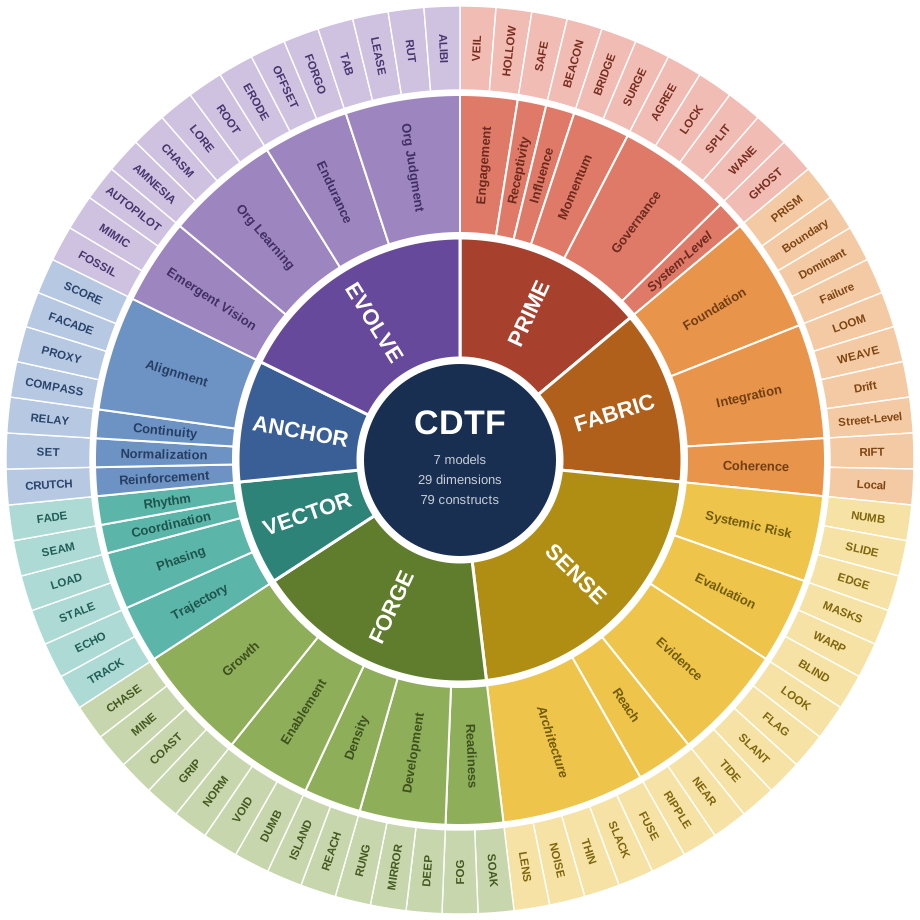
Seven connected models. Nearly 80 organizational building blocks.
How CDTF works
Identify the organizational condition requiring attention and test the evidence supporting that conclusion.
Determine what must change in governance, capability, coordination, ownership, evidence, and reinforcement.
Make the redesigned response operational, test it under real conditions, and use new evidence to refine what comes next.
Diagnosis, design, and execution operate together. At the same time, one construct may need further diagnosis, another may call for a change in design, and another may require an adjustment to execution. New evidence can change what each construct requires.
The problem
Plans, milestones, training, and engagement can all be managed well while important conditions shaping the outcome remain outside the program's view. The four examples below illustrate how those conditions can affect the outcome even when the program appears well managed. CDTF brings them into view, connects them to design choices, and helps determine what may need to change during execution.
Those reports are not independent. Evidence from other sources can help determine whether the reported progress reflects what is happening across the organization.
Each choice may make sense on its own. Evaluating the combined effect of these choices over time can reveal when they might be pushing the transformation effort in the wrong direction.
The work gets done and the results are real, so the capability may appear to belong to the organization. The problem arises when the organization has not deliberately chosen to keep the work outsourced and has not developed the internal capability to perform it, yet proceeds as if the capability were its own.
Knowing when to stay the course matters. When new evidence challenges the assumptions behind the destination, governance might need to allow the destination to be reconsidered as well as the plans and timing used to reach it.
How CDTF is organized
The framework starts with a whole-system view and becomes more precise as it moves through models, dimensions, and building blocks called constructs. Each level helps connect evidence to choices about design and execution.
See how the framework worksThe seven models
Each model focuses attention on different organizational conditions and connects what it reveals to choices about design and execution. The models form a connected system rather than a fixed sequence. Several may be relevant at the same time, and their emphasis can change as the transformation develops and new evidence emerges.
Explore the seven modelsA quick discovery
This preview introduces twelve of the nearly 80 constructs in the framework. Each question begins a line of inquiry. The full framework connects what the question reveals to consequences for design and execution.
Open the Explorer previewDo sponsor incentives, performance measures, and priorities line up with what the transformation requires, or do they reward outcomes that compete with the transformation?
White paper
See how a more precise diagnosis changes the design, how the revised design changes execution, and how execution produces new evidence.
Read the white paperBook One · Expected late 2026
It will explain the research behind the framework, its seven models and constructs, and the reasoning that connects diagnosis, design, and execution.
Learn about the bookCDTF resources and updates
Receive Book One updates, new CDTF resources, and invitations to future briefings and discussions.